
Stainless Steel Passivation and Electropolishing Services
Passivation is an chemical treatment used to enhance the corrosion resistance of stainless steel by removing free iron and another surface contaminants left from manufacturing. The process leaves a clean, inert surface with a restored chromium rich oxide layer that protects the metal from oxidation.
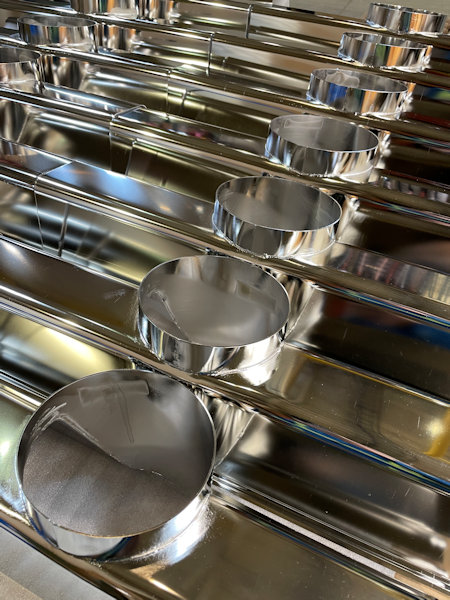
Electropolishing is an electrochemical process that removes a microscopic layer of material from the surface, using an electric current and a specialized electrolyte bath. It is essentially the reverse of electroplating; instead of depositing metal, it selectively dissolves high points (peaks) on the surface while leaving the valleys almost untouched.
Key Benefits
Passivation:
- Improve corrosion resistance: Enhance the natural protective layer of stainless steel
- Contaminant removal: Eliminates free iron and residues from machining or fabrication
- Non-destructive process: No dimensional changes to the parts
- Cleaner surface: Improve performance and aesthetics
Electropolishing:
- Removes micro burrs, sharp edges, and surface defects (through deburring at micro level)
- Improves corrosion resistance by eliminating embedded contaminants, initiation sites, and creating a chromium-enriched passive layer on stainless steel
- Enhance cleanability and reduces bacterial adhesion (critical for medical, food, pharma and semiconductors applications)
- A bright, reflective and aesthetically superior appearance can be achieved through process parameters adjustments (depends on material surface conditions).
Compliant Specifications:
- ASTM A380: Standard practice for cleaning, descaling and passivation of stainless steel
- ASTM A967: Chemical passivation treatments for stainless steel parts
- ASTM B912: Standard specification for passivation and electropolishing of stainless steel parts
- AMS 2700: Passivation of corrosion resistant steels (Type 6 & 8 often combined with electropolishing)